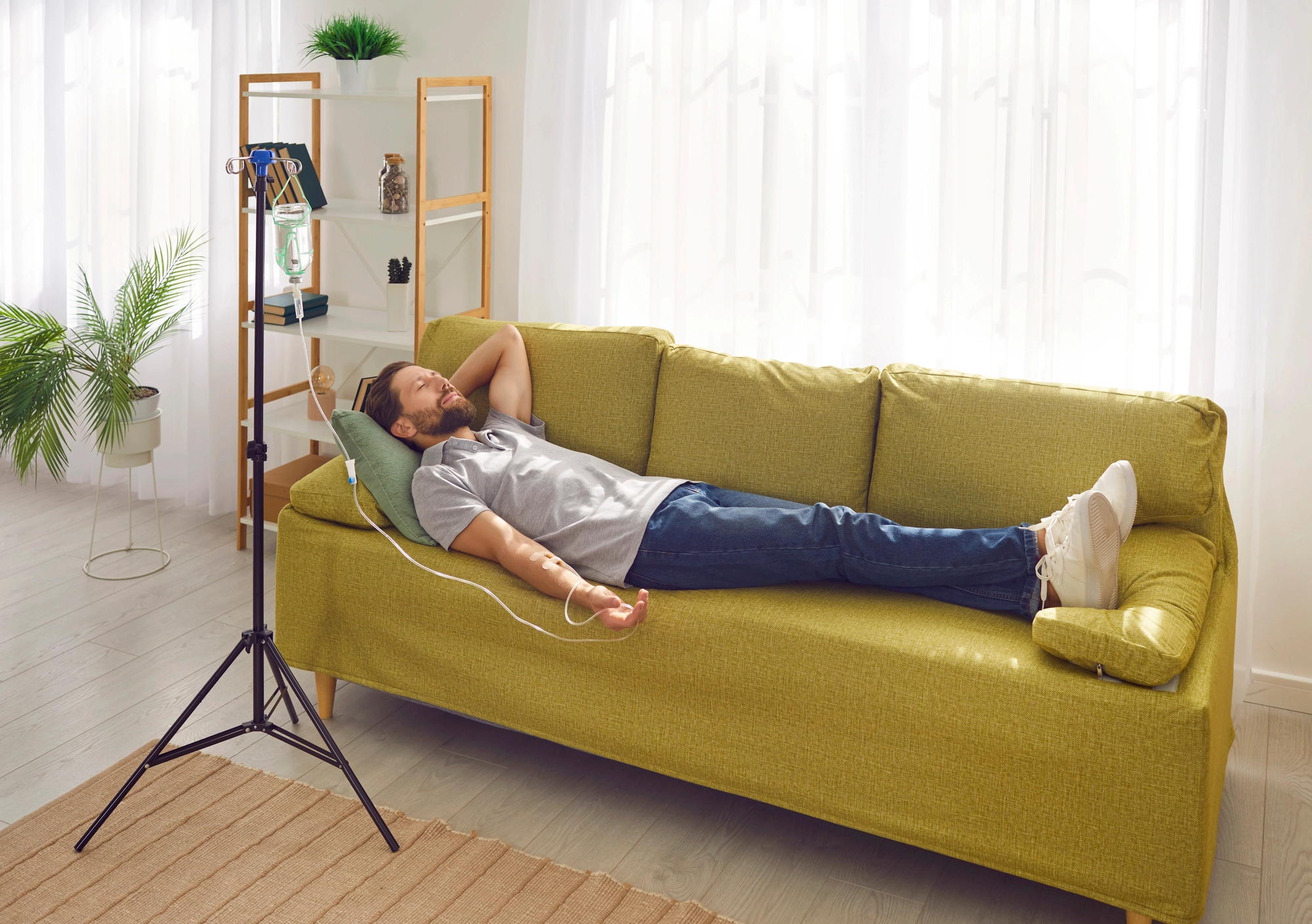
In the past, if you had a plane to catch, that meant unwinding from work for some hours. But modern life runs at a very fast pace. It demands seamless work and being available and constantly online, even if you have a plane to catch, and regardless of travel fatigue or sleep loss.
Whether recovering from a red-eye flight, jet lag, or a late night, many are now bypassing caffeine and naps in favor of IV therapy to reset their systems.
This approach provides a physiological "reset" rather than a medical fix. When exhaustion and dehydration stall your body's maintenance, a well-timed IV session bridges the gap between feeling "run down" and returning to your productive routine.
The Biological Toll of Long-Haul Travel
Air travel can severely punish the human body. The air inside a plane cabin is famously dry, often hovering around 10% to 15% humidity. For comparison, the Sahara Desert usually sits around 25%. Over several hours, this environment pulls moisture out of every cell, leading to the familiar symptoms of "travelers' brain": headaches, dry skin, and a general sense of sluggishness.
IV therapy after flights works by addressing this deficit at the source. When you drink water, it must be processed by the stomach and absorbed by the intestines, a process that can be slow if your digestive system is already stressed by travel.
An IV bypasses this waiting game, delivering a saline solution directly into the bloodstream to restore plasma volume immediately. This IV rehydration helps stabilize the body's internal environment, making it much easier to transition from the airport to your first meeting or a family gathering.
Timing the Recovery: When to Schedule Your Session
One of the most frequent questions regarding IV therapy for recovery after a flight is whether to book a session immediately upon landing or to wait until the next morning. The answer depends on your "recovery window." If you land in the afternoon and have a social or professional obligation that evening, an immediate session is often the best way to clear the "brain fog" associated with dehydration.
However, if your goal is to reset your sleep schedule (circadian rhythm), many people find that scheduling a session the following morning is more effective. This "Morning-After Reset" provides the body with the electrolytes and B-vitamins needed to kickstart the day, signaling to the brain that the sleep period is over and it is time to be alert.
By aligning the hydration session with your desired wake-up time, you are using the treatment as a biological anchor to fight off jet lag.
The Late-Night Recovery: Beyond Just Hydration
Late nights, whether caused by work deadlines or social events, often involve a combination of sleep deprivation and the consumption of diuretics like caffeine or alcohol. These factors work together to deplete the body of essential minerals and water. The feeling of a "hangover" or extreme fatigue is often just the body’s way of screaming for a balanced internal chemistry.
Late-night recovery through an IV offers a more balanced approach than simply chugging water before bed. Most IV "recovery" blends include a mixture of magnesium, calcium, and B-complex vitamins.
Magnesium is particularly helpful after a late night, as it aids in muscle relaxation and can help improve the quality of the few hours of sleep you actually manage to get. By restoring these minerals while also providing a high volume of fluids, you are helping your liver and kidneys process the stress of the night more efficiently.
The Role of Antioxidants in Travel Recovery
High-altitude travel exposes the body to more than just dry air; it also involves a slight increase in oxidative stress. This is one reason why you may feel "aged" or exceptionally tired after a 10-hour flight. Many modern IV therapy protocols for after flights include antioxidants like Glutathione.
While the term "antioxidant" is often used in a marketing sense, in this context, it serves a practical purpose. Glutathione is a naturally occurring molecule in the body that helps neutralize the free radicals caused by environmental stress.
If you make this a part of your post-travel reset, you are helping your body clean up the cellular "jumble" made by the flight, which often results in clearer skin and more consistent energy levels over the following 48 hours.
Building a Routine Reset Strategy
To get the most out of an IV therapy session for after-flight recovery, it should be considered as part of a broader strategy rather than a one-off "miracle." The most successful users of IV therapy in 2026 are those who use it to maintain a baseline.
- Pre-Hydrate: Drink water normally leading up to your flight or night out.
- The IV Bridge: Use the IV session to bridge the gap when oral intake is no longer sufficient or possible.
- The Follow-Up: Continue to eat mineral-rich foods and maintain a regular sleep schedule in the days following the session.
Think of the IV as a "jump start" for a car battery. It gets the engine turning, but you still need to drive the car to keep the battery charged. The goal is to return to your normal routine as quickly as possible, without the lingering "hangover" of travel or exhaustion holding you back.
Book Your After-Flight IV Therapy Session With Mobile IV Puerto Rico
As our schedules become more demanding, the time we have for "passive recovery" (sitting on a couch for two days to feel better) has vanished. You should focus on the direct delivery of what the body has lost, such as water, electrolytes, and essential vitamins, to stay in the game without the physical crash that usually follows a long journey or a long night.
Mobile IV therapy in Puerto Rico offers a way to condense that recovery time into a single session. At Mobile IV Puerto Rico, we provide a convenient and personalized way to support hydration, wellness, and recovery. Whether it’s your first session or part of an ongoing wellness routine, mobile IV therapy is designed with comfort, safety, and efficiency in mind.
Our licensed medical professionals deliver customized IV therapy tailored to your individual needs. From recovering after illness to staying properly hydrated during a busy schedule, we bring high-quality care directly to you, anywhere in Puerto Rico.
If you’re in Puerto Rico and you are ready to try IV therapy, book a session with us and let Mobile IV Puerto Rico help you feel replenished comfortably and safely.